
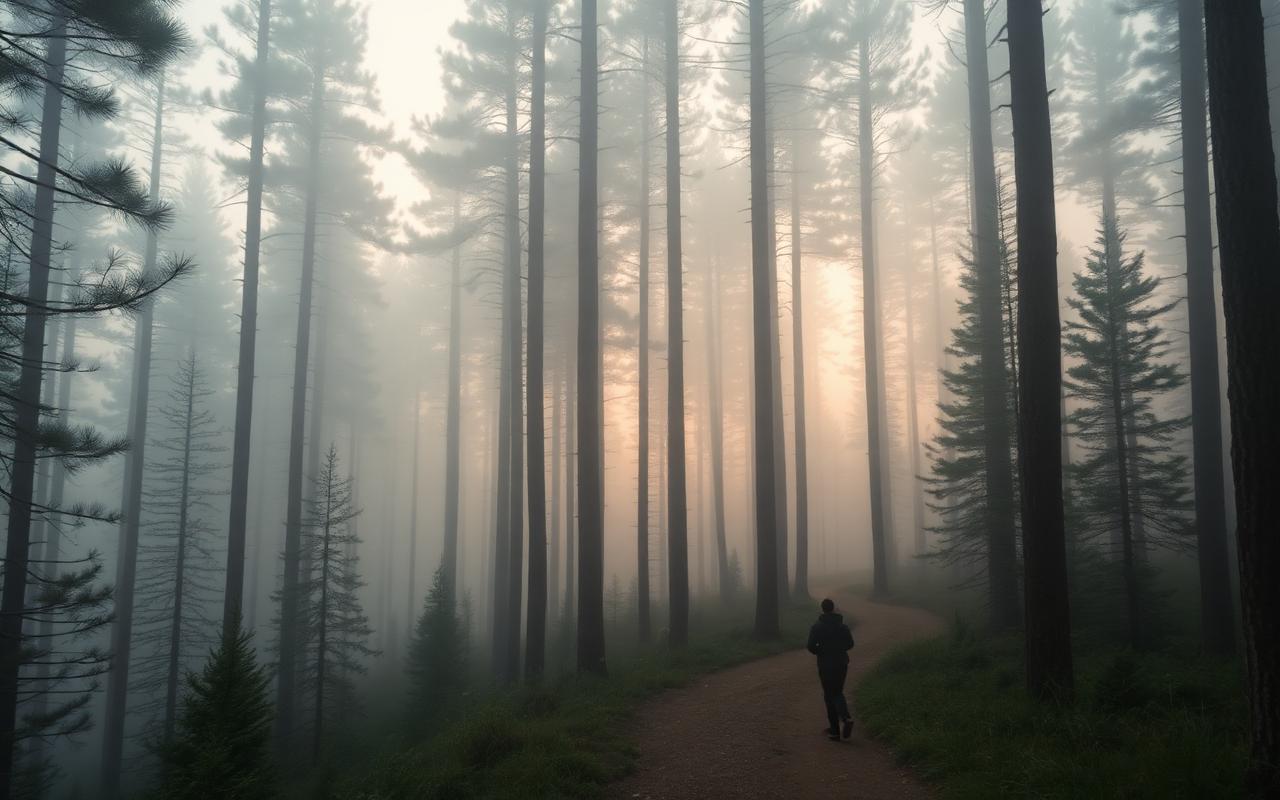
Three days in the Black Pine valley
Fog, an unreliable map, and a new respect for wool socks — notes from a slow loop through ancient timber.
We left the trailhead at first light with three days of food, a paper map that turned out to be a decade older than advertised, and the quiet confidence of two people who had not yet been humbled by the weather. By the second afternoon, the valley had taken care of that.
This is the kind of route you don't really plan — you commit to a direction and let the forest tell you the rest. Below are the honest notes: what we packed, what we got wrong, and what we'd carry next time.
The route, loosely
Black Pine valley sits in a fold of old-growth that most maps treat as a blank green rectangle. There's one named track in, an unnamed ridge out, and a creek between them that you'll cross more times than you'll count. Three days is the sweet spot — long enough to slow your nervous system down, short enough that your shoulders forgive you.
Day one is climbing under canopy. Day two is the high traverse, where the trees thin and the wind finds your collar. Day three is the slow, knee-grinding descent back to the car.
What we packed (and what saved us)
- — Merino base layers, top and bottom. Worth every gram when the fog rolled in.
- — Two pairs of thick wool socks. One on, one drying on the pack.
- — A hooded down mid-layer. Camp warmth is non-negotiable on a three-day trip.
- — Hardshell jacket. Used once, for ninety minutes. Worth carrying for those ninety minutes.
- — A real map and compass. GPS is fine until the canopy thickens.
- — A small notebook. Phones lie about how the day actually felt.
The lessons
Trust the wool. Cotton socks were a beginner mistake we hadn't made in years and somehow made again. By lunch on day one we'd swapped to merino and forgotten about our feet entirely — which is the whole point.
Camp early. The instinct on a long route is to push for one more hour. Don't. Pitch while you can still see, eat before you're cold, and you'll sleep three times better.
Leave the schedule at the car. Slow hiking isn't a pace, it's a posture. The valley rewards anyone who's willing to sit on a log for twenty minutes and just listen.
What we'd do differently
Next time: lighter food, heavier coffee. A second small towel. And we'd start a half-day earlier so day one ends with light to spare. Three days is plenty — but only if you let the first afternoon belong to the forest, not the trail log.